

Benefits of Cloud-Based Business Management Software in 2026
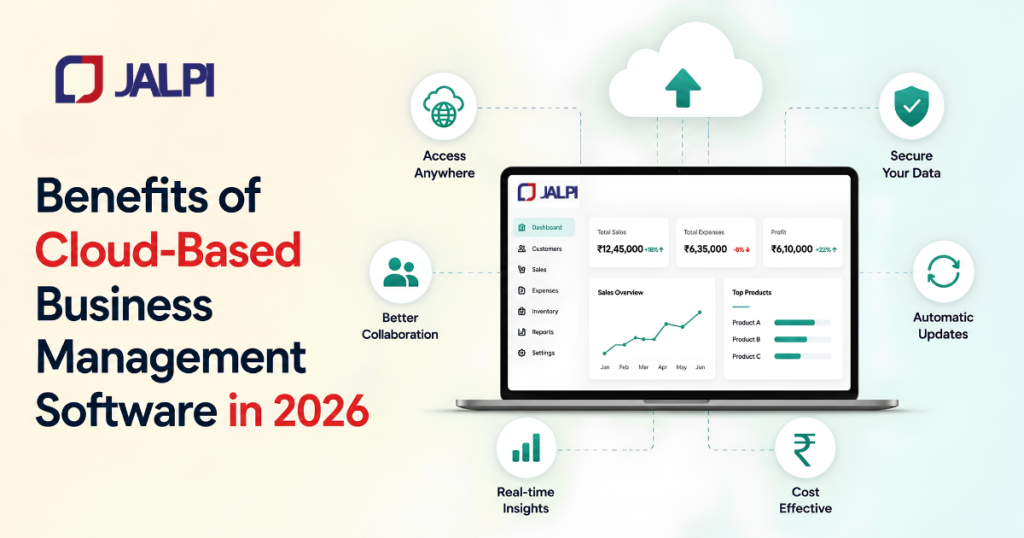
Most growing businesses reach the same breaking point at some predictable moment.
The team expands. The projects multiply. The customers increase. And suddenly, the collection of spreadsheets, individual email accounts, WhatsApp groups, and disconnected apps that worked perfectly well at ten people is visibly, painfully failing at thirty.
Data lives in different places. Team members cannot see what their colleagues are working on. Managers spend their mornings chasing updates instead of making decisions. A customer complaint logged on one channel never reaches the team member who can resolve it. Reports that should take minutes take hours because someone has to manually pull information from five separate tools and piece it together into something coherent.
This is the moment when the question becomes urgent: what should we actually be running this business on?
In 2026, the answer for a growing number of businesses from lean startups to established SMEs is cloud-based business management software. Not a collection of single-function tools stitched together with integrations and workarounds, but a unified, accessible, scalable platform that manages the full complexity of a growing business from a single system in the cloud.
At Jalpi, we have built exactly this for businesses across India. And the shift our customers describe when they move to a proper cloud-based business management software platform is consistent: less time spent on administration, more time spent on growth, and a level of operational clarity that was simply not possible before.
In this blog, you will find:
What cloud-based business management software actually is and how it works
The most significant benefits businesses gain when they make the move
Why 2026 is the right moment to consolidate onto a cloud platform
How to choose the right cloud business management software for your stage of growth
A complete FAQ section and on-page SEO checklist at the end
What Is Cloud-Based Business Management Software?
Cloud-based business management software is a unified platform that hosts all of a business’s core operational tools – task management, team communication, HR, invoicing, , and analytics on remote servers accessible through the internet, rather than installed on local machines or maintained through on-premise infrastructure.
Instead of running your operations across a desktop accounting program, a separate project management tool,and the third HR system each with its own login, its own data silo, and its own subscription cost cloud business management software brings all of these functions together in one connected system that every authorized team member can access from any device, at any time, from any location.
The cloud element is not just a hosting detail. It is what makes the platform genuinely transformative for growing businesses.
Cloud collaboration tools built into the platform mean that a team member in Mumbai, a manager in Ahmedabad, and a field representative in Surat are all looking at the same real-time data the same task board, the same customer records, the same project status simultaneously, without any of them needing to send a file, schedule a meeting, or wait for someone else to update a shared document.
This is the operational foundation that the businesses growing fastest in 2026 are building on.
The Core Benefits of Cloud-Based Business Management Software
1. Access Your Entire Business From Anywhere, On Any Device
The most immediate and visible benefit of cloud-based business management software is freedom from location.
With traditional on-premise software, your business data lives on a server in your office. Your team can only access it when they are physically present or through complex, expensive VPN infrastructure that creates its own maintenance overhead. The moment your team becomes distributed whether through remote work, field operations, multiple offices, or simply a manager working from home one day on-premise software becomes a liability.
Cloud business software eliminates this constraint entirely. Because the platform lives on remote servers and is accessed through a browser or mobile app, every authorized team member has full access to every function they need from anywhere with an internet connection.
What this means in practice:
A sales manager can review the pipeline and update customer records from a client visit without returning to the office
A remote team member has identical access to tasks, projects, and communication tools as a colleague sitting in the headquarters
A business owner travelling between cities can approve invoices, check team performance dashboards, and respond to escalations from a phone
Field teams log activity, update job status, and access customer history in real time without paper-based systems or end-of-day manual entry
For India’s growing base of hybrid and distributed business teams, this anywhere-access capability is not a convenience. It is a fundamental operational requirement and cloud-based business management software is what makes it possible without complexity or additional infrastructure investment.
2. Reduce IT Costs and Eliminate Infrastructure Overhead
Traditional business management software deployed on-premise carries a substantial hidden cost that most businesses underestimate when they make the initial decision.
The servers that host the software need to be purchased, maintained, and eventually replaced. The IT personnel required to manage those servers, apply security patches, perform backups, and troubleshoot infrastructure problems add to payroll or consultant costs. When the software requires an upgrade, it typically means downtime, migration projects, and additional implementation expense.
For growing SMEs, these costs are not just financial. They are a distraction of management attention away from the business itself.
Cloud-based business management software transfers all of this infrastructure responsibility to the platform provider. The servers, the security, the backups, the uptime monitoring, the software updates all of it is managed by the vendor, not by your team. Your business gets enterprise-grade infrastructure without the enterprise-grade IT department required to run it.
The cost advantages compound as the business scales:
No capital expenditure on servers or local networking infrastructure
No ongoing IT maintenance costs for hardware and on-premise software
Automatic software updates that add features and fix security vulnerabilities without downtime or implementation projects
Predictable, subscription-based pricing that scales with usage rather than requiring large upfront investments
Elimination of the per-seat software license model that makes traditional business management software expensive for growing teams
At Jalpi, our cloud business management software is priced on a usage-based model meaning businesses pay for what they actually use, with no fixed minimum commitments and no surprise infrastructure costs as the team grows.
3. Scale Instantly as Your Business Grows
One of the most significant operational advantages of cloud-based business management software over traditional alternatives is its ability to scale in real time up or down without any technical intervention.
Adding a new team member to a traditional on-premise system might require a new software license, additional server capacity, IT configuration, and a delay of days or weeks. Adding a team member to a cloud business management software platform takes minutes create a login, assign permissions, and the new team member has immediate access to every function they need.
This scalability works in both directions. During peak periods a product launch, a seasonal demand surge, a major project the platform handles increased usage without performance degradation. During quieter periods, costs adjust accordingly without the overhead of maintaining underutilized infrastructure.
For growing businesses, this elastic scalability means:
No planning required for “how many users will we have in 18 months” the platform grows with you automatically
New team members are productive from day one without IT setup delays
Seasonal businesses can scale their operational capacity without permanent cost commitments
Acquisition or partnership scenarios where team sizes change rapidly are handled without infrastructure disruption
Business management software that cannot scale gracefully becomes a constraint on growth businesses outgrow it and face painful, expensive migrations at exactly the moment their operational complexity is highest. Cloud-based business management software removes that ceiling entirely.
4. Improve Team Collaboration Across Every Function
The most operationally transformative benefit of cloud-based business management software is what it does to team collaboration specifically, the collaboration that should be happening between functions that currently operate in separate tool silos.
In most growing businesses without a unified business management system, sales does not know what operations has committed to a customer. Finance does not know which projects are generating billable hours this week. HR does not have visibility into the project workload that is driving the overtime requests they are receiving. Marketing does not know the customer feedback that sales is collecting in the field.
These are not communication failures. They are structural failures, the inevitable result of different functions operating on different platforms with different data that never flows between them.
Cloud collaboration tools built into a unified business management system solve this structurally. When tasks, records, HR data, invoices, and project information all live in the same platform, accessible to every authorized team member in real time, the cross-functional visibility that was previously only achievable through time-consuming meetings and manual reporting becomes automatic.
What improved team collaboration looks like in practice:
A customer service agent handling a complaint can instantly see the customer’s complete purchase and communication history without escalating to another department
A project manager can see team workload across all active projects before assigning a new task, preventing overload without a manual check-in
A finance team member generating an invoice can see the project completion status that triggers the billing without contacting the project team
A manager reviewing team performance has access to real-time data across every function task completion, sales pipeline, customer satisfaction, attendance in a single dashboard
Team collaboration software that is built into the same platform as your operational tools rather than running separately alongside them creates a level of cross-functional coordination that fundamentally changes how quickly a growing business can move.
5. Automate Business Processes and Eliminate Manual Overhead
Growing businesses lose an extraordinary amount of productive capacity to manual, repetitive processes tasks that follow the same steps every time, require no judgment to execute, and consume time that should be going toward higher-value work.
Cloud-based business management software with built-in workflow management software capabilities allows businesses to automate these processes entirely building rule-based workflows that execute automatically when defined triggers occur, without any human intervention required.
Common business processes that cloud-based automation handles:
Task assignment triggered automatically when a project stage is completed
Customer follow-up messages sent automatically at defined intervals after a query or purchase
Invoice generation triggered when a project milestone is marked complete
Attendance and leave summaries compiled automatically and distributed to managers
Overdue task alerts sent to the responsible team member and their manager without manual monitoring
Weekly performance reports generated and distributed without anyone building a spreadsheet
Business process management software capabilities within a cloud-based business management software platform mean that the administrative layer of running a business the coordination, the reminders, the reporting, the routing largely runs itself. Your team’s attention is freed for the work that actually requires a human to do it.
Business productivity software outcomes from this automation are consistently significant. Teams that automate their five to ten highest-frequency manual processes through cloud business software typically recover 15 to 25 hours per week across the team capacity that goes directly back into productive, revenue-generating work.
6. Protect Your Business Data With Enterprise-Grade Security
Data security is one of the most important and most underestimated considerations for growing businesses managing increasing volumes of sensitive information customer records, financial data, employee information, project details, and business communications.
Traditional on-premise business management software places the security responsibility entirely on the business and most growing SMEs do not have the IT expertise, the budget, or the time to maintain enterprise-grade security standards on internal infrastructure.
Cloud-based business management software from a reputable provider transfers that responsibility to a team of dedicated security professionals whose entire function is protecting the platform and the data on it.
Security capabilities that cloud platforms provide as standard:
End-to-end data encryption for all stored and transmitted information
Automatic, regular data backups that ensure business continuity in the event of any failure
Role-based access controls so every team member sees only the data their role requires
Multi-factor authentication protecting against unauthorized account access
Regular security audits and vulnerability assessments by dedicated security teams
Compliance with data protection regulations relevant to Indian businesses
For a growing SME, the security infrastructure of a well-built cloud business management software platform is dramatically superior to anything the business could maintain independently at a fraction of the cost and without any of the in-house expertise required.
7. Make Faster, Better Decisions With Real-Time Data
One of the most powerful benefits of cloud-based business management software is what it does to business visibility the ability of founders, managers, and team leads to understand exactly what is happening in their business at any given moment.
In businesses without a unified business management system, generating a meaningful picture of business performance requires manually collecting data from multiple tools, compiling it into a report, and distributing it to the people who need it a process that takes hours and produces information that is already out of date by the time it is read.
Cloud business software with integrated analytics generates this picture automatically, in real time, in a dashboard that is always current and always accessible.
What real-time data visibility enables:
Managers identify project delays and resource constraints before they become crises
Sales leaders see pipeline performance and conversion rates updated instantly as deals progress
Finance teams have live cash flow visibility without waiting for end-of-month reports
HR managers track attendance, leave balances, and team capacity in real time
Founders assess overall business health across every function from a single dashboard, from any device, at any time
Business productivity software that provides this level of visibility transforms decision-making from a retrospective exercise reviewing what happened last month to a proactive one: identifying what is happening now and acting on it before it becomes a problem.
The businesses that move fastest in 2026 are the ones making the most informed decisions, the most quickly. Cloud-based business management software is what gives them the information to do it.
8. Integrate All Your Business Tools Into One Connected System
Most growing businesses do not start with a platform strategy. They start with individual tools one for tasks, one for HR, one for invoicing and gradually accumulate a tech stack that covers every function but connects nothing.
The cost of this disconnection is measured in manual data entry, delayed information, integration failures, and the cognitive overhead of navigating a dozen different systems in the course of a single working day.
Cloud-based business management software replaces this fragmented stack with a connected business management system where data flows automatically between functions where a completed task updates the project record.
The integration benefits compound across the business:
Cloud collaboration tools connect team communication directly to tasks and projects conversations live in context, not in separate threads
Workflow management software connects process automation across functions a trigger in one module automatically initiates an action in another
Team collaboration software connects people to work every team member sees the same information, in the same system, in real time
Business process management software connects workflows across departments end-to-end processes run consistently without manual handoffs between tools
At Jalpi, our cloud-based business management software platform connects task management, WhatsApp Business API, HRMS, invoicing, , and analytics in a single, unified system giving growing businesses the connected operational infrastructure that was previously available only to enterprises with dedicated IT teams and seven-figure technology budgets.
How to Choose the Right Cloud-Based Business Management Software
With many platforms positioning themselves as cloud business management software, choosing the right one requires evaluating against the specific needs of your business rather than the longest feature list.
Coverage Across Core Business Functions
The right business management software should cover the functions most critical to your operations task and project management, HR, invoicing, communication, and ideally in a single integrated platform rather than through loosely connected modules.
Ease of Adoption
The most powerful cloud business software is useless if your team does not actually use it. Prioritize platforms with intuitive interfaces that every team member not just power users or IT-trained administrators can navigate confidently from day one.
Mobile Accessibility
In India’s hybrid work environment, your cloud-based business management software must be fully functional on mobile devices. Field teams, remote workers, and managers on the move all need the same visibility and capability as team members at a desktop.
Scalability Without Complexity
Choose a business management system that grows with your business without requiring expensive migrations, re-implementations, or disruptive upgrades. The platform should handle 10 users and 1,000 users with equal reliability.
Security and Compliance
Verify that any cloud business management software you consider provides data encryption, role-based access controls, regular backups, and compliance with data protection standards relevant to your business and your customers.
Transparent, Flexible Pricing
Choose a cloud business software platform with pricing that scales proportionally with your usage not one that locks you into fixed tiers that become expensive before you have realised the platform’s full value. Usage-based models like Jalpi’s give growing businesses the flexibility to expand without penalty.
Why 2026 Is the Right Year to Move to Cloud-Based Business Management Software
The case for cloud-based business management software has been building for years. In 2026, three factors make the decision more urgent than it has ever been.
Competition is operating on cloud infrastructure. Businesses that have already consolidated onto unified cloud business management software platforms are operating with fundamentally lower administrative overhead, faster decision-making, and stronger team coordination than competitors still running on fragmented tool stacks. The operational gap between cloud-first businesses and those still managing work across disconnected systems is widening.
AI is only valuable when your data is connected. The AI-powered analytics, automation, and business intelligence capabilities that are transforming business operations in 2026 require connected, structured data to function. Cloud-based business management software creates the data infrastructure that makes AI capabilities actionable. Fragmented tool stacks produce fragmented data that AI cannot effectively interpret or act on.
The cost of delay is compounding. Every month a growing business operates on disconnected systems is a month of manual overhead, missed visibility, inconsistent customer experience, and preventable operational errors. The migration to a unified cloud business software platform becomes more complex and more costly the longer it is deferred because data accumulates in silos, team habits entrench around broken processes, and the gap between current operations and what is possible widens.
The right time to consolidate onto cloud-based business management software was last year. The second best time is now.
Conclusion: Build the Operational Foundation Your Business Growth Deserves
Cloud-based business management software is not a technology upgrade. It is an operational transformation.
It gives your team the ability to work from anywhere with the same visibility and capability as they have in the office. It eliminates the infrastructure costs and IT overhead of traditional on-premise systems. It scales with your business without friction. It automates the administrative work that consumes your team’s productive capacity. It connects every function of your business into a single, coherent, real-time system.
Here is a complete recap of the benefits covered in this blog:
Access your entire business management system from anywhere, on any device
Reduce IT costs and eliminate on-premise infrastructure overhead
Scale instantly as your team and operations grow without technical intervention
Improve team collaboration across every function through unified cloud collaboration tools
Automate business processes with workflow management software built into the platform
Protect business data with enterprise-grade security managed by dedicated professionals
Make faster, better decisions with real-time analytics across every business function
Connect all your tools into one integrated cloud business management software ecosystem
The businesses that build on the right foundation a unified, cloud-based, fully integrated business management software platform will move faster, serve customers better, manage teams more effectively, and scale with confidence at every stage of their growth.
Explore how Jalpi’s cloud-based business management software gives growing businesses the operational infrastructure to do exactly that every single day.
Frequently Asked Questions
Cloud-based business management software is a unified platform that hosts all core business operational tools task management, HR, invoicing, , team communication, and analytics on remote servers accessible through the internet. Unlike traditional on-premise software, it requires no local installation or infrastructure and can be accessed from any device, anywhere, by any authorised team member in real time.
The main benefits include anywhere access from any device, reduced IT infrastructure costs, instant scalability without technical intervention, improved team collaboration across functions, built-in that reduces manual overhead, enterprise-grade security managed by dedicated professionals, real-time business analytics for faster decision-making, and the integration of all business tools into a single connected system.
Traditional business software is installed on local machines or maintained on on-premise servers requiring capital investment in hardware, IT expertise to maintain, and physical presence to access. Cloud business management software is hosted remotely, requires no local infrastructure, updates automatically, scales instantly, and is accessible from any internet-connected device. It is fundamentally more flexible, more affordable to maintain, and more suited to how modern growing businesses actually operate.
A business management system is a structured platform that coordinates all core operational functions of a business in one place — tasks, projects, customers, team, finances, and workflows. A cloud-based business management system delivers all of this through a single, internet-hosted platform that connects data across every function and makes it accessible to every authorised team member in real time.
Workflow management software is the automation layer within a business management platform that defines, executes, and monitors how work moves through an organisation triggering task assignments, sending reminders, routing approvals, and updating records based on preset rules. In cloud business software, workflow management is built into the same system as your tasks and HR. so automations can trigger across every function without requiring separate integration tools.
Business process management software is a platform that allows businesses to design, automate, monitor, and improve the end-to-end processes that drive operations from customer onboarding to invoice generation to HR workflows. In a cloud-based business management software platform, business process management capabilities are integrated with the tools that execute those processes, creating a closed loop where process design and process execution live in the same system.
Cloud-based business management software improves team collaboration by giving every authorised team member real-time access to the same data — tasks, customer records, project status, and performance dashboards — regardless of their location or device. Built-in team collaboration software features keep communication in context alongside the work it relates to, and cloud collaboration tools ensure that updates made by one team member are instantly visible to everyone else.
Yes — reputable cloud business management software providers invest heavily in security infrastructure that most growing SMEs could not maintain independently. This includes end-to-end data encryption, automatic backups, multi-factor authentication, role-based access controls, and regular security audits. For most growing businesses, the security standard of a well-built cloud platform is significantly higher than what they could achieve with on-premise infrastructure.
Business productivity software refers to tools that help businesses accomplish more work, more effectively, in less time — by organising tasks, automating repetitive processes, improving communication, and providing analytics that support faster decisions. Cloud-based business management software is the most comprehensive form of business productivity software because it delivers all of these benefits in a single, connected, always-accessible platform.
Choose based on the core functions your business needs to manage — task management, HR, invoicing, and are the most common priorities. Evaluate platforms on ease of adoption, mobile accessibility, scalability, security standards, integration capability with your existing tools, and pricing transparency. Prioritise a unified platform over a collection of single-function tools — the integration between functions is where most of the operational value is created.